A solar cell or panel is connected to an smu as shown in figure 6.
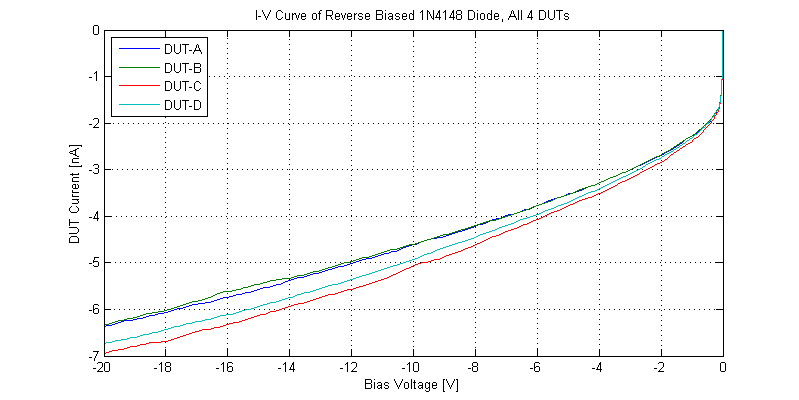
Testing solar panels v vs i curve reverse bias.
At the knee of a normal i v curve is the maximum power.
Referring to figure 1 the span of the i v curve ranges from the short circuit current isc at zero volts to zero current at the open circuit voltage voc.
There is bigger current in case of forward bias than in.
Testing the 12 volt solar panel.
A linear sweep of the output voltage with a duration of 20 ms was applied in both the forward direction from short to open circuit and the reverse direction.
Similarly the open circuit voltage voc is the potential that develops across the terminals of the solar cell when the external load resistance is very large figure 3.
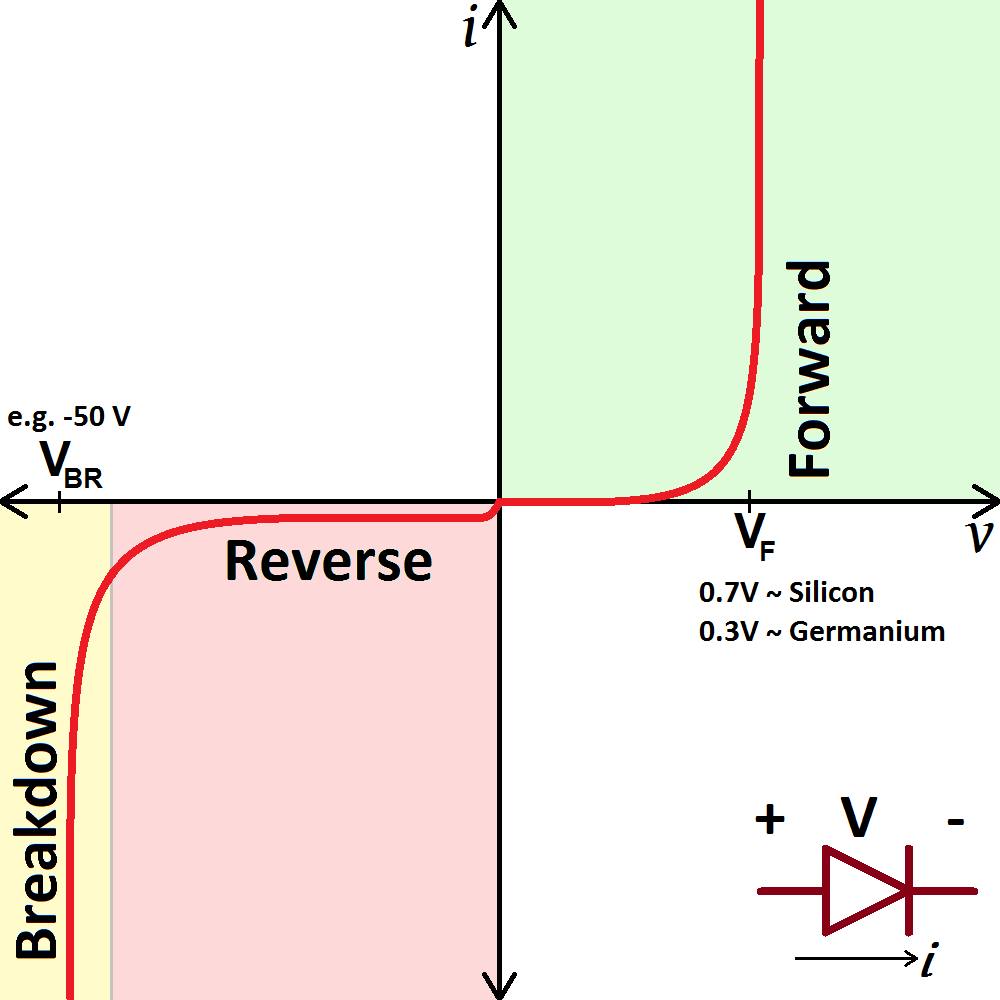
If your solar cell is a semiconductor diode such as pn silicon cell or pin thin film you get common diode i v curve in dark condition.
Short circuit current isc flows with zero external resistance v 0 and is the maximum current delivered by the solar cell at any illumination level.
The topmost figure shows uncorrected i v curves corresponding to a high efficiency solar cell with an open circuit voltage of 720 mv.
A solar cell or panel is connected to an smu as shown in figure 6.
A four wire connection is made to eliminate the effects of the lead resistance.
Efficiency η efficiency is the ratio of the electrical power output p out compared to the solar power input p in into the pv cell.
Simply touch the solar panel leads with the multi meter probes matching their corresponding polarity red to red black to black.
As most solar panels are 12 volts the solar panel test methods are basically the same.
Typical fill factors range from 0 5 to 0 82.
Figure 1 shows a typical i v curve the power voltage or p v curve that is computed from it and key points on these curves.
You will want to ensure that you place the positive to positive and negative to negative when attaching your multimeter to the connection on the back of your solar panel.
A four wire connection is made to eliminate the effects of the lead resistance.
A larger fill factor is desirable and corresponds to an i v curve that is more square like.
Some exceptions may apply based on panel type.
Fill factor is also often represented as a percentage.
How to test a 12 volt solar panel vs other voltages.